
2025 Hyundai TUCSON vs Nissan Rogue: Which SUV Fits Your South Carolina Lifestyle?
Posted at Wed, Aug 6, 2025 3:00 PM
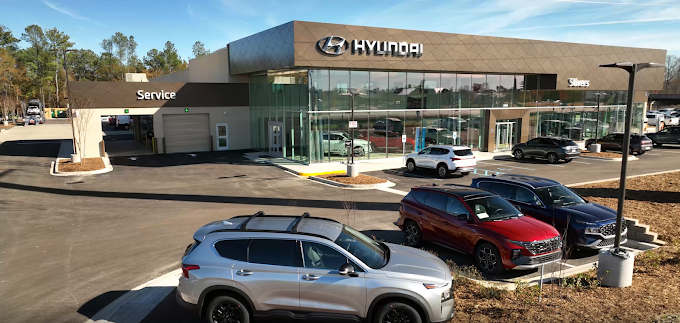
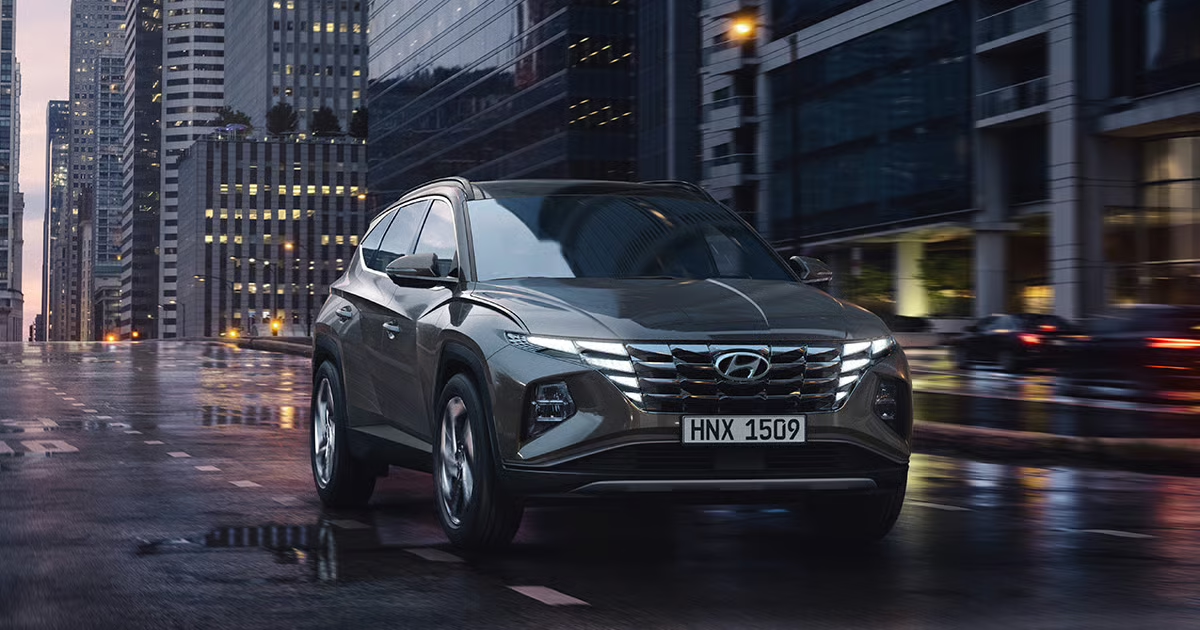
Competition is fierce in the fast-growing compact SUV market, with virtually every auto manufacturer producing these affordable, fuel-efficient vehicles. In such a crowded market, the 2025 Hyundai TUCSON vs the Nissan Rogue are among the most popular options. But which compact SUV is the best choice for your South Carolina lifestyle? At Stivers Hyundai in Columbia, South Carolina, we've created this in-depth comparison of the Hyundai TUCSON vs Nissan Rogue for you to see how both vehicles measure up on key metrics.
Hyundai TUCSON vs Nissan Rogue Performance and Fuel Economy Compared
Hyundai equips the TUCSON with three different powertrain options, while Nissan commits to a single engine option throughout its Rogue lineup. The entry-level Rogue's turbocharged 1.5-liter three-cylinder is the winner. It generates 201 horsepower and allows the Rogue to accelerate from 0 to 60 mph in 8 seconds. This gives it a slight advantage over the TUCSON's standard 2.5-liter four-cylinder that generates 187 horsepower and has a 0-to-60 mph sprint time of 8.8 seconds. While this gives the Rogue an edge, the momentum shifts back to the TUCSON when you consider its eco-friendly powertrain options.
Both of the TUCSON's green powertrains use a 1.6-liter four-cylinder gas engine and an electric motor combination. The hybrid generates 231 horsepower, while the plug-in hybrid produces 268 horsepower. The 2025 models haven't been tested yet, but the 2022 Limited plug-in hybrid achieved 0 to 60 mph in 7.1 seconds, 0.7 seconds faster than the hybrid. With technological improvements, the 2025 models may be slightly faster.
The 2025 Hyundai TUCSON is the clear winner in terms of fuel economy, as it's available with eco-friendly powertrains. The Blue trim hybrid achieves an EPA-estimated 38 mpg combined, while the plug-in hybrid has an 80 MPGe combined rating and delivers 33 miles of purely electric driving.
The Nissan Rogue with standard front-wheel drive trails slightly behind with an EPA-estimated 30 mpg in the city and 37 mpg on the highway. Choosing all-wheel drive sees those numbers fall by 2 mpg in both the city and highway. These figures are better than the gas-only TUCSON, which gets 25 mpg in the city and 32 mpg on the highway with the standard front-wheel drive and 23 mpg in the city and 29 mpg on the highway with all-wheel drive.
Hyundai TUCSON vs Nissan Rogue Interior and Cargo Space Overview
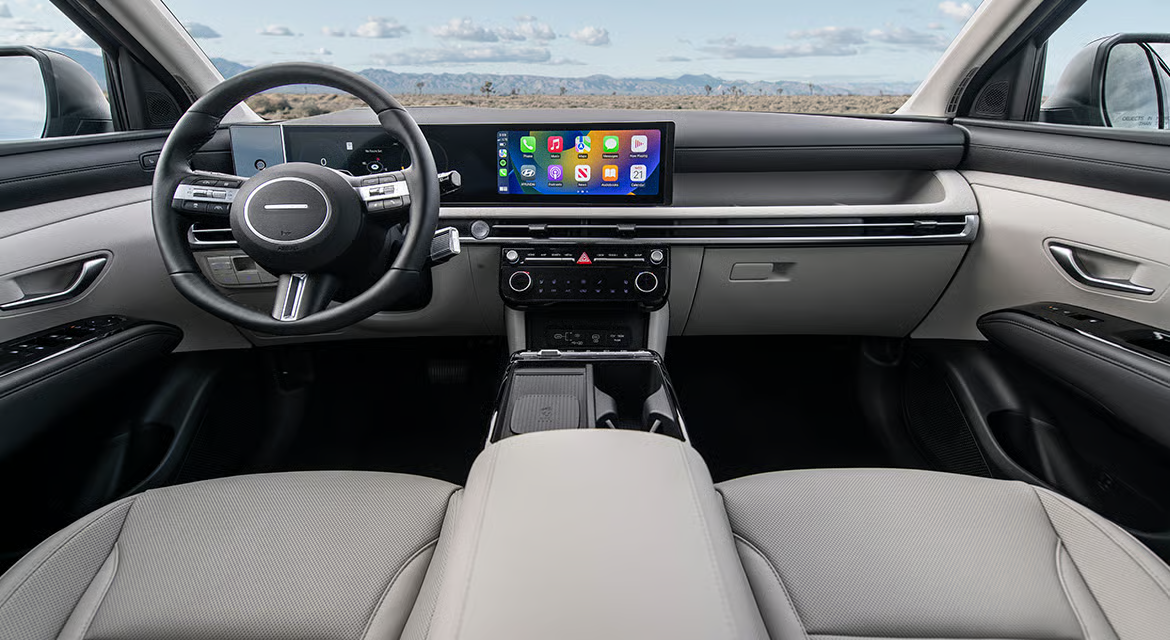
Both SUVs have refined cabins, taking their styling cues from their manufacturer's popular sedans. The experience up front is similar, with plenty of head and leg room for comfortable motoring. The TUCSON offers nearly three inches more legroom in the back, ensuring it can comfortably seat tweens and adults. They'll feel more cramped in the Rogue, whose dimensions are in line with other vehicles in its class.
A 12.3-inch infotainment screen comes standard across the TUCSON range, but a screen this size is only included in the Rogue's SL and Platinum trims. The Nissan's standard screen is 8 inches, which makes it challenging to read at a glance. Both vehicles have wireless Android Auto and Apple CarPlay as standard features across all trims.
When the seats are folded, there's little separating their cargo space. The TUCSON has a 0.7 cubic-foot advantage that most drivers won't notice. With the rear seats upright, the Rogue's trunk is a little pokey at 31.6 cubic feet compared to the TUCSON's 38.7 cubic feet. Whatever you're doing, you'll appreciate the TUCSON's larger cargo area.
Hyundai TUCSON vs Nissan Rogue Safety Features and Reliability
Hyundai and Nissan both prioritize safety by including leading driver-assistance features in all trim levels. The TUCSON has the Hyundai SmartSense system that's similar to the Nissan Rogue's ProPILOT Assist 2.1 system. Both include automatic braking, blind-spot monitoring, forward collision warning, and rear cross-traffic alert. However, the TUCSON's lane-keeping feature is more sophisticated, providing active support to prevent unintentional lane changes rather than sounding an alert.
Both vehicles received perfect five-star ratings after the National Highway Traffic Safety Administration crash tests, but only the 2025 Hyundai TUCSON received the Insurance Institute for Highway Safety's highest honor of Top Safety Pick+. It also received a consumer rating of 85 for quality and reliability from J.D. Power. It's harder to gauge the Rogue's reliability, as J.D. Power hasn't given it a consumer rating for the last two model years. However, its 83 rating in 2023 suggests it's a dependable choice.
Comparing Pricing and Value for Money
The Nissan Rogue is slightly more affordable than the Hyundai TUCSON, with an MSRP starting at $28,590. You can get behind the wheel of a gasoline TUCSON for a starting MSRP of $28,705, a hybrid for $33,465, and a plug-in hybrid for $39,730. There are five Rogue trim levels and 11 TUCSON trims, including the hybrid and plug-in hybrid variants.
The TUCSON may be more expensive, but Hyundai's generous warranty may convince you it's worth the money. You receive two extra years or 24,000 miles of limited warranty and five extra years or 40,000 miles of powertrain warranty. Hyundai's complimentary maintenance offer for the first three years or 36,000 miles is also more generous than Nissan's three free oil changes over the first two years or 24,000 miles.
Final Verdict: Which SUV Is Right for You?
The right SUV is a personal choice, but Hyundai's extensive standard tech options, eco-friendly powertrains, and extended warranty give it the edge in our eyes. If you agree, check out the 2025 Hyundai TUCSON at our Columbia dealership. Contact us today, or give us a call at 803-788-6800 to schedule a test drive. We'll answer your questions about the latest TUCSON and explain our on-the-spot trade-in valuations and competitive finance deals that can help you get behind the wheel of a new TUCSON.
Images by OEM